
Unexpected consequences in the vineyard, worthy of celebration.
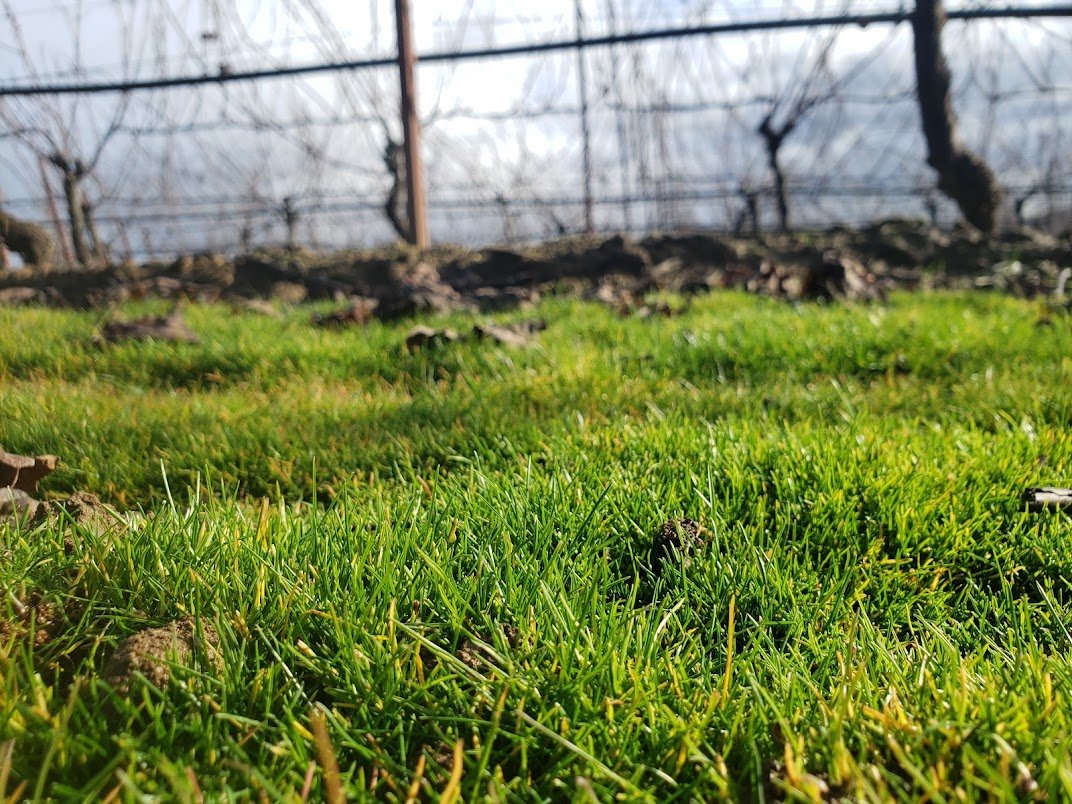
Jason Moulton planted Oakville bluegrass (hybrid “poa bulbosa”) across 90 acres at Whitehall Lane as part of a commitment to regenerative farming. He was drawn to the perennial grass’ ability to sequester carbon in untilled soil, while reducing management costs. A few years after planting, he noticed something unexpected: reduced red blotch virus in the interior of his vine blocks. Red blotch moves through vineyards by way of the threecornered alfalfa hopper (TCAH), an insect that is particularly attracted to alfalfa, and other legumes. Ironically, most Napa growers rely on legume dominant cover crops that give the TCAH optimal habitat. Swap the legumes for a perennial grass based cover system, pest pressure appears to drop.
While Moulton will not call it a silver bullet, he does believe Oakville bluegrass has helped reduce the presence and negative impacts of the threecorned alfalfa hopper.
OBC Regional Director, Mike Costello, also spoke with the Napa Valley Register about the benefits of planting Oakville bluegrass and the $3.5 million dollars in grant funding available through the AMP grant funded by the USDA.