
How NCRS Practice 327 builds soil health in your orchard or vineyard
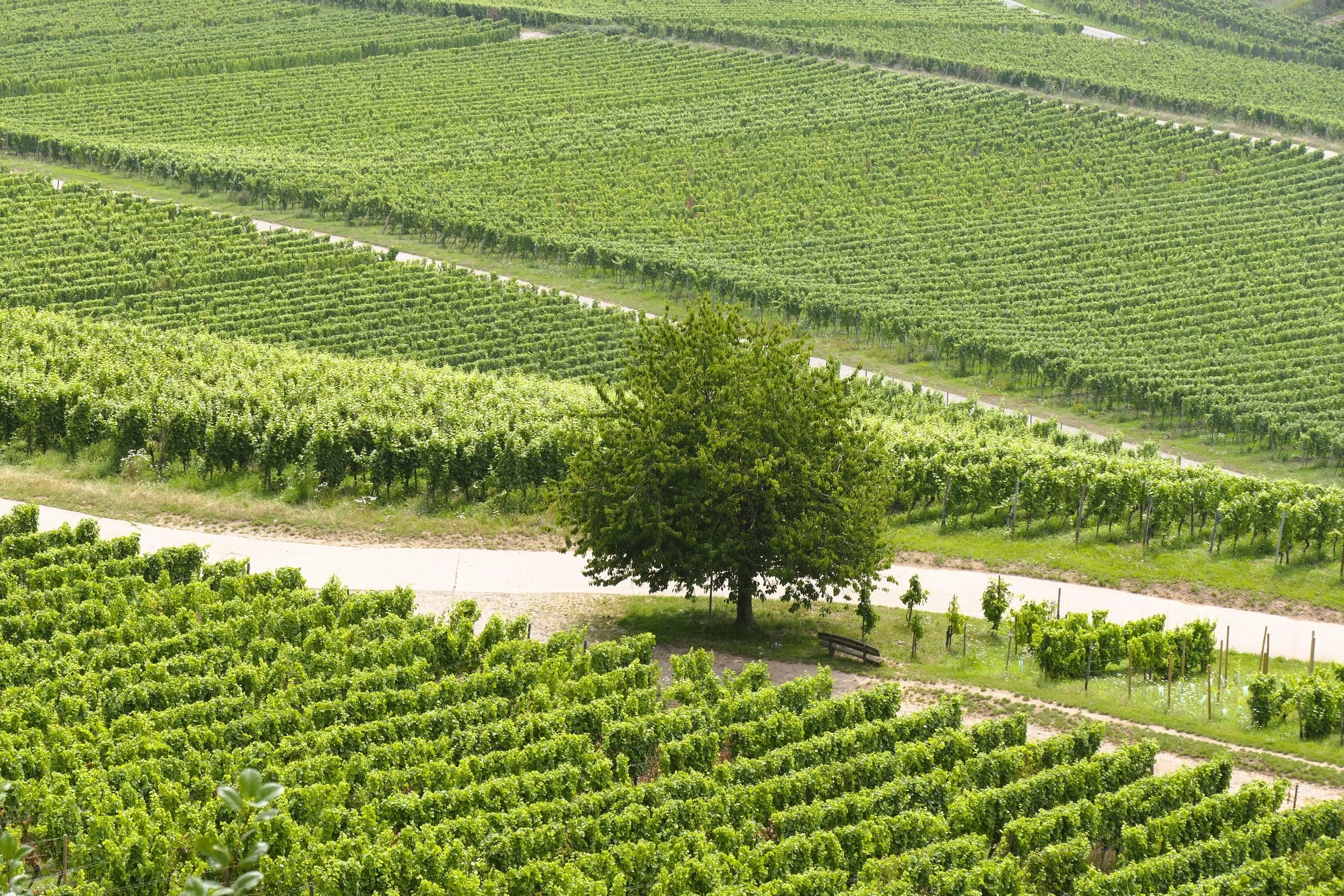
Walk the alleys of most California orchards and vineyards and you'll find the same thing underfoot: bare dirt, or close to it. It is easy to think of that ground as just the space between the rows. But that space is valuable real estate that can support the overall health of the operation. The alleys may be a third or more of the total acreage, and can provide benefits to the whole system instead of sitting idle.
Planting the alleys with a perennial cover keeps living roots in the ground, which improve soil aggregation and water infiltration. Perennial cover crops build soil organic matter, and increase microbial activity in the soil thereby supporting nutrient availability for the cash crop. Meanwhile, the plants in the system are removing atmospheric CO2 and sequestering carbon in the soil. Living roots in the ground hold the soil in place and reduce seasonal dust and erosion, while biodiversity grows above and below ground.
These are the documented benefits of ‘Conservation Cover,’ known as practice 327. The Oakville Bluegrass Cooperative's (OBC) Advancing Markets for Producers (AMP) grant exists to help growers put this practice into action. Check out what Practice 327 means, why it matters for California orchards and vineyards, and how AMP fits in.
Practice 327, explained
Practice 327 is the USDA Natural Resources Conservation Service (NRCS) practice called Conservation Cover. It is defined as establishing and maintaining permanent vegetative cover. Minimizing or eliminating tillage, establishing perennial species, and allowing annuals to reseed each year, are core strategies in successful Conservation Cover practice.
This practice can be applied to most cropping systems, as well as fallowed ground, to improve soil health and reduce erosion. In many orchards and vineyards the alleys are seeded and managed under Practice 327, while the tree row or vine row is kept clear for irrigation and equipment. The practice is not limited to the alleys, though. It can be applied across the entire block.
The benefits of perennial cover are well documented in scientific literature. The full list includes reducing erosion, protecting water quality, cutting dust emissions, and providing habitat for pollinators and other beneficial organisms. But the purposes most central to OBC's work, and to the AMP grant, are the ones focused on soil:
Improving soil health by maintaining or increasing soil organic matter
Improving soil health by increasing soil aggregate stability
Improving soil health by enhancing habitat for soil organisms
Improving soil health by reducing compaction
In contrast to annual cover crops that are often tilled into the soil as green manure, perennial covers are known to increase soil carbon via root exudates, improved soil microbiome, and by minimizing soil disturbance and tillage.
Why perennials
A perennial cover, once established, keeps living roots in the ground year-round. That continuous root activity builds aggregate stability, feeds the soil biology, and steadily moves carbon from the atmosphere into the soil profile. Reduced or no till systems help build the soil structure and keep the carbon sequestered in the ground. Perennial cover systems also benefit from not requiring an annual purchase and seeding cycle, saving a grower both money and time!
For California growers in particular, a well-chosen perennial alley cover can deliver soil health gains without competing for the water and nutrients your trees or vines depend on. The Oakville bluegrass hybrid variety was developed with exactly this balance in mind.
How OBC's AMP grant connects to Practice 327
Oakville Bluegrass Cooperative's Advancing Markets for Producers grant, funded by the USDA/NRCS, helps growers offset the cost of perennial seed and promotes minimal tillage management. This makes trying perennial cover an easy decision:
First 10 acres of planted seed, growers receive up to $3,750 toward the cost of perennial seed.
Next 100 acres, growers receive an additional incentive of $100 per acre for perennial seed, first come first served.
Growers are responsible for sales tax and shipping. If the hybrid “Oakville bluegrass” is the selected cover, a Grower's Guide will be provided to help with establishment and ongoing management. Participants will also be invited to educational events and receive support with the California Soil Restoration Project, a carbon farming project. OBC Cooperative members receive priority consideration across the board, including hands-on support and priority access to specialized planting equipment.
Eligibility and application
AMP funding is open to domestically owned farms in California, Oregon, Washington, or Arizona. Acres enrolled in AMP may not receive funding for the same NRCS practices on the same acreage.
To apply, we need the following Farm Service Agency (FSA) information:
Farm, tract, and field numbers for the acreage you want to enroll
Your Core Customer ID (CCID)
A completed, current Form AD-2407 and Form AD-1026
A subsidiary print from the FSA reflecting completion of those forms, along with any farm maps the FSA has provided
Form CPA-52, the required NRCS environmental evaluation will be completed for all projects by OBC staff. The full program requirements are posted on the AMP page of our website.
The Bottom Line
NRCS Practice 327 is a useful framework because it puts soil health and carbon on equal footing with the more familiar conservation goals like erosion control. For California orchard and vineyard growers, it is also a recognition that what happens in your alleys matters, year after year, for the long-term productivity of your ground.
OBC's AMP grant is one of the most direct ways to act on that idea. If you are thinking about perennial cover for this fall, or you have questions about whether your acreage fits, reach out. We're here to help you work through it.
Contact us at info@obc.ag, or visit the AMP page on the OBC website to learn more and to review the full AMP program requirements.