
Let's Stop Punishing Farmers Who Are Making Our Food System More Sustainable
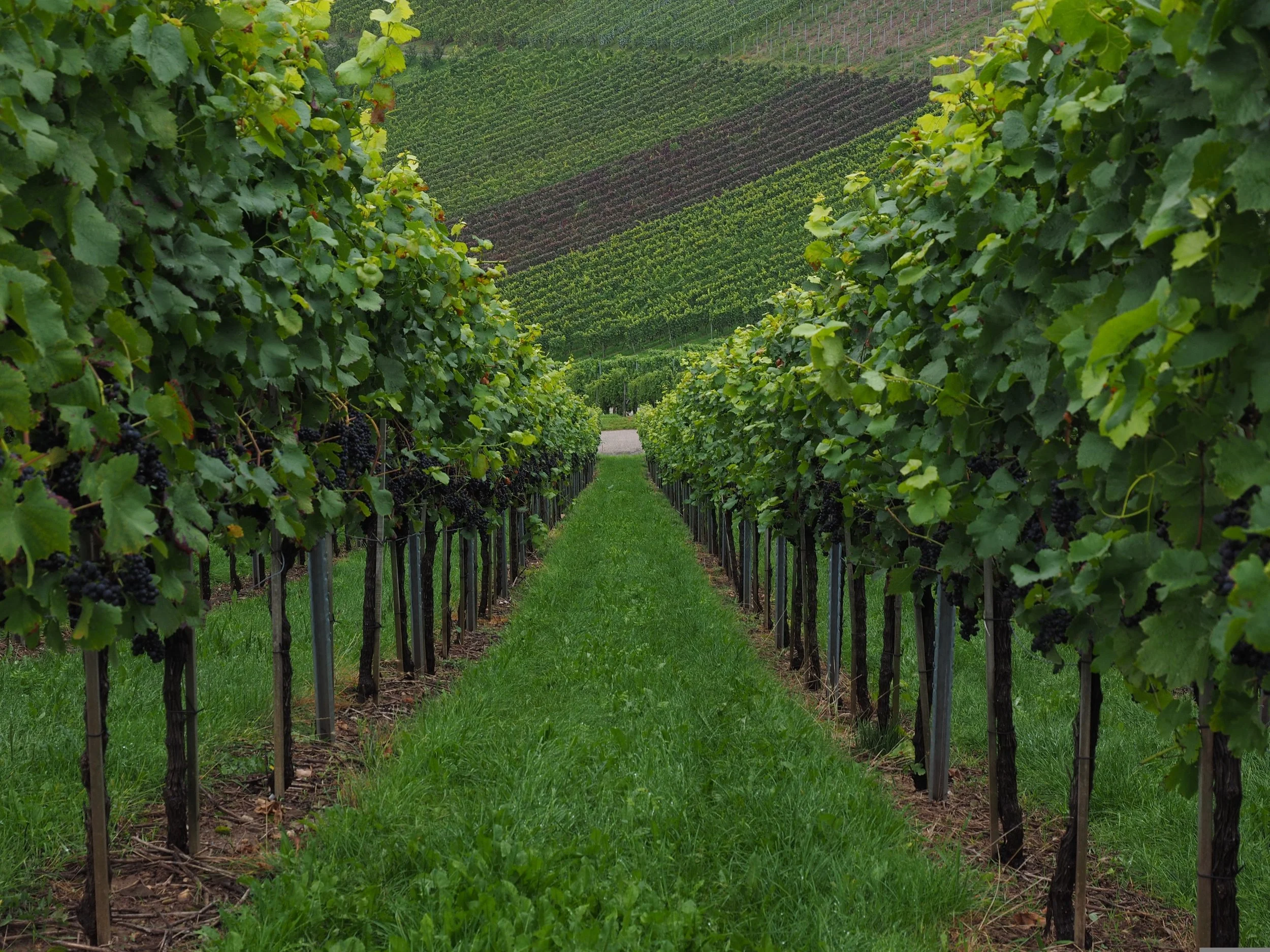
We grow wine grapes, tree fruit, and nuts in California. We are also, in our own modest way, trying to help fix the climate. We do this by keeping living roots in the soil year-round and minimizing disturbance of the soil. This practice, "continuous living cover” is vital to regenerative farming systems. Done consistently, it pulls carbon dioxide out of the atmosphere and stores it in the ground, while building the soil health that makes our vineyards and orchards more resilient to drought and heat.
We would like more of our neighbors to do the same. And we believe that the companies purchasing carbon removal credits are exactly the partners we need to make that happen. But first, we need to tell you about a flaw in the carbon credit market, a flaw that is working against all of us and our shared goals.
The Opportunity We Are Missing
Healthy, carbon-rich soil is not the norm in American agriculture. Conventional farming leaves the ground bare between crops and frequently disturbs the soil, steadily depleting the biological life that makes soil productive, and releasing stored carbon into the atmosphere. The result is farmland that is both a source of greenhouse gas emissions and increasingly dependent on synthetic inputs to sustain yields. It’s an ecologically and financially costly vicious cycle.
This cycle is reversible, especially in our orchards and vineyards. Managing farms with a practice of continuous living cover can sequester atmospheric carbon at scale while building soil organic matter. Researchers estimate that shifting just half of U.S. cropland to this style of management could turn the agricultural sector from a net CO2 emitter into a net carbon sink!
The troubling news is that today, fewer than one in twenty acres in the United States is managed this way. In California that ratio is even worse. The reason is straightforward: cover cropping, reduced soil disturbance and maintaining living roots in the soil introduces change, risk, costs and at times reduced yields, without a direct financial return to the farmer. Soil based carbon removal credits exist precisely to change that equation. So why isn't it working?

The Market Rules Backfire
To gain momentum with “the best” climate and soil friendly practices in agriculture, we need first movers. We need early adopters, pioneers and visionaries. We need them to prove the thesis, to lead and to help de-risk the practice, while establishing the social and cultural norm of success through reduced tillage and continuous living cover. We need trailblazers.
For soil carbon and ag producers, a real problem lies in how carbon credit registries and buyers define "additionality". The requirement that a carbon credit represents sequestration that would happen without the buyer's investment. In most contexts, additionality is a legitimate standard. We agree. Corporate sustainability officers are right to demand it.
The way additionality is currently enforced has a consequence that runs counter to carbon market goals. Registry rules establish a farmer's "baseline" not by the actual soil carbon in their fields. Instead the baseline is based on the last three years of practice in a given field. If a grower has already been using cover crops, the registries treat that practice as a baseline and will not issue credits for continuing it. To qualify for future credits based on future carbon sequestration, a grower must stop the practice for three years and then restart.
Read that again slowly. The rules effectively tell early-adopter farmers that the only path to carbon credit revenue is to stop doing the right thing, wait three years, and then start again. No registry document uses those words, but it is the unavoidable logic written into how the baseline is calculated. The USDA research bears this out: it found that a majority of fields using cover crops in one year no longer reported using them over the following five years. Carbon market additionality rules are one of the factors discouraging consistent adoption.
Why This Matters to Carbon Credit Buyers
We understand that the last thing a corporate sustainability team wants is to purchase credits that do not represent real impact. Consider what this market structure is measuring, valuing and actually producing.
After more than two decades and a billion dollars of government funded incentive payments the cover crop adoption rate has barely budged beyond 5%. Add reduced tillage to cover-cropping, and the numbers are worse. The inverted incentive that’s baked into additionality rules is one of several reasons for lack of lasting, widespread adoption. They create a financial reward for using the practice inconsistently, and they deny revenue to the farmers most committed to using it consistently.
Here is the question that carbon credit buyers should be asking the registries: Is a carbon credit that motivates a new entrant to stop doing the right thing, an additional carbon credit — or a carbon liability? Further, consider this: when farmers are challenged every season with market volatility, input costs, and land conversion pressure, doesn’t future carbon credit revenue help them stay the course with climate friendly practices - regardless of when they adopted them?
There is a deeper problem with the field-level additionality rule as well. Even if a farmer planted their first cover crop three seasons ago, their soil carbon levels are a fraction of what those soils could hold. Decades of conventional management are not undone in three years. The carbon being drawn down and stored in years four through fifteen of a continuous living cover practice is just as real and additional as the carbon stored on a neighboring field where the practice is just beginning. When only 5% of acres are managed this way, every acre that starts or continues the practice is yielding net-positive carbon dioxide removals, in spite of the strong pull from conventional agriculture. The practice is additional at the system level, and that is the level that matters for the climate.
A Better Way Forward, and Your Role
At the Oakville Bluegrass Cooperative, we have built a carbon farming program, theCalifornia Soil Restoration Project, that takes a different approach. We offer two types of credits, both measured identically using verified soil carbon data.
Soil Health Builder credits are associated with fields where a grower is just beginning the practice of continuous living cover. These are straightforward under current registry conventions.
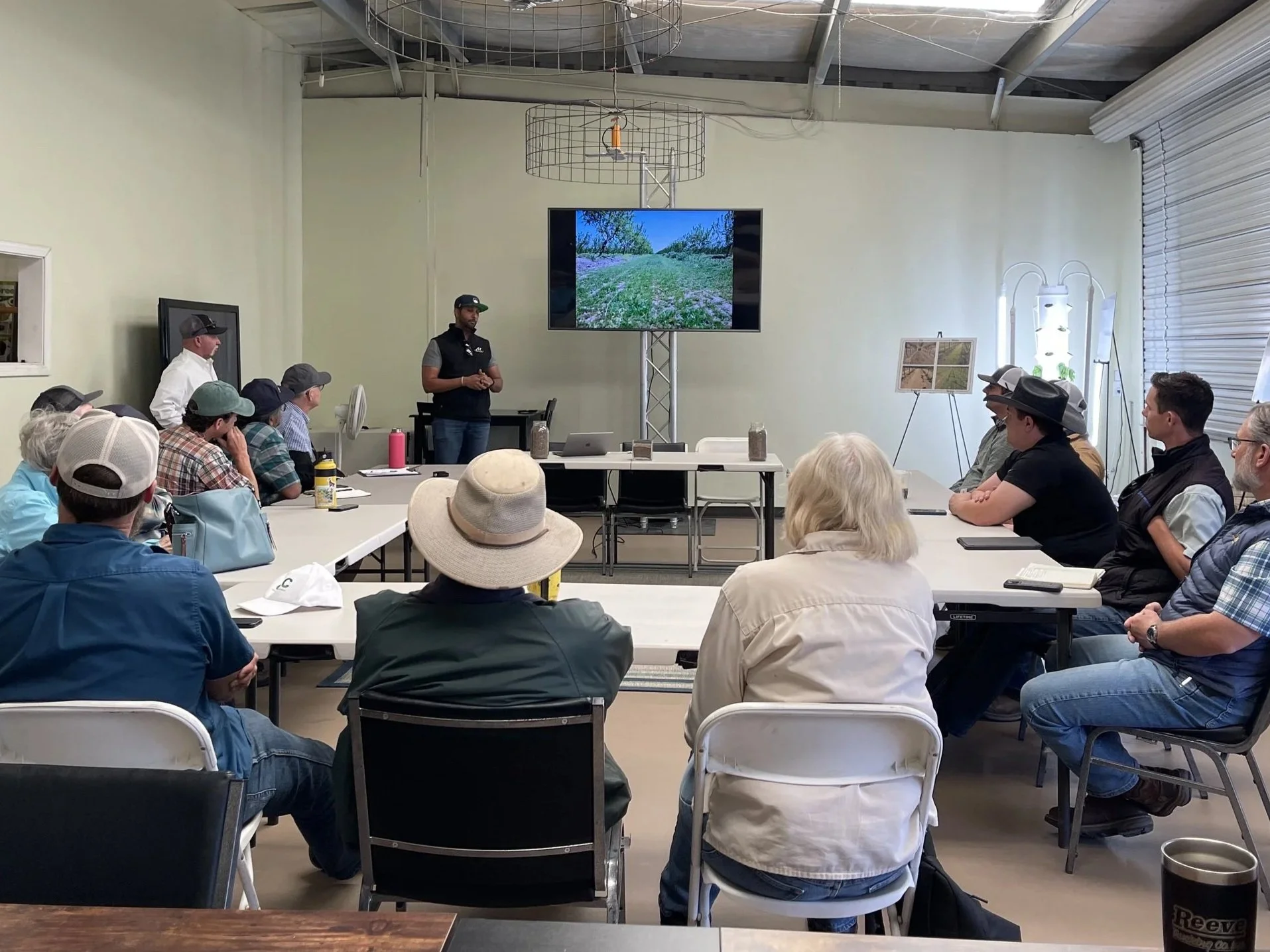
Soil Health Trailblazer credits are associated with fields where a grower is already doing the hard work. The trailblazers have invested in practice changes, equipment and seed, they’ve struggled along a new learning curve, absorbed costs without a financial safety net or the enticement of next year’s carbon credit sales. Soil health trailblazers are ambassadors by hosting field days, documenting their results, and giving their neighbors the confidence that this is something they can do too. Yet every day and every season that the Trailblazers navigate market challenges without the enticement and opportunity to sell their soil carbon vintage, introduces real threat of them moving back to conventional production, or worse. Late adopters will not convert unless the Trailblazers are seen succeeding and committed to the long haul.
We consider Trailblazer credits to be premium credits, because the farmers who hold them are the linchpins of a lasting transition in our region. Without them, the Soil Builders have no model to follow.
We Are Asking for a Partner, Not a Favor
We are not asking carbon credit buyers to lower their standards. We are asking you to raise them: to look past the proxy measure of "when did this farmer start?" and ask the harder, more important questions: "Is this practice uncommon in this landscape, will it persist without this revenue, and will it expand and be broadly adopted without this incentive?" In our project area, the practice is in place on about one in twenty-five acres, so the answer to the first question is yes. Without the financial return that carbon credit revenue provides, the practice will not persist at scale, and it will not expand without a strong market based incentive.
The carbon credit market has enormous potential to accelerate the transition to sustainable agriculture. Realizing that potential requires that the farmers who took the earliest risks receive the recognition they deserve. A rule that tells them the smart financial move is to wait is not a market rule worth keeping.
We are farmers, not policy advocates. We have watched this market's incentive structure discourage exactly the behavior it claims to reward, and we feel an obligation to say so plainly. If you are a corporate buyer who cares whether your sustainability investment is having a real impact on the ground, we would welcome a conversation.
Ask us about our Soil Health Trailblazer credits. And ask the registries why they are penalizing the farmers who are taking risks while leading the way forward to a sustainable system.