
Growing Cover with Green Cover Seed: Building a Permanent Stand That Pays Off

This is the second conversation in our Growing Cover series, where we talk about putting perennial cover to work in orchards and vineyards. This time we sat down with Keith Burns of Green Cover Seed.
Keith and his brother started Green Cover in 2009 on their family farm in south central Nebraska. In the first year they produced enough seed to cover about 1000 acres. Today the company runs two locations, employs around 60 people, and ships 30 million pounds of seed to all 50 states and beyond. Because they use cover crops themselves, they have a stake in making sure what they sell works.
Here are five key ideas from our conversation that matter most for West Coast growers thinking about perennial cover.
1. Roots are the point
Cover cropping is rooted in tradition. Before chemical inputs and mechanization, maintaining diverse species on every acre was standard practice. History shows that farmers, including George Washington, have been using cover crops and green manure crops to replenish depleted soils as a regular part of the rotation for generations. While synthetic fertilizer inputs became popular and cost efficient after WWII to provide essential plant nutrients, they do not build soil health.
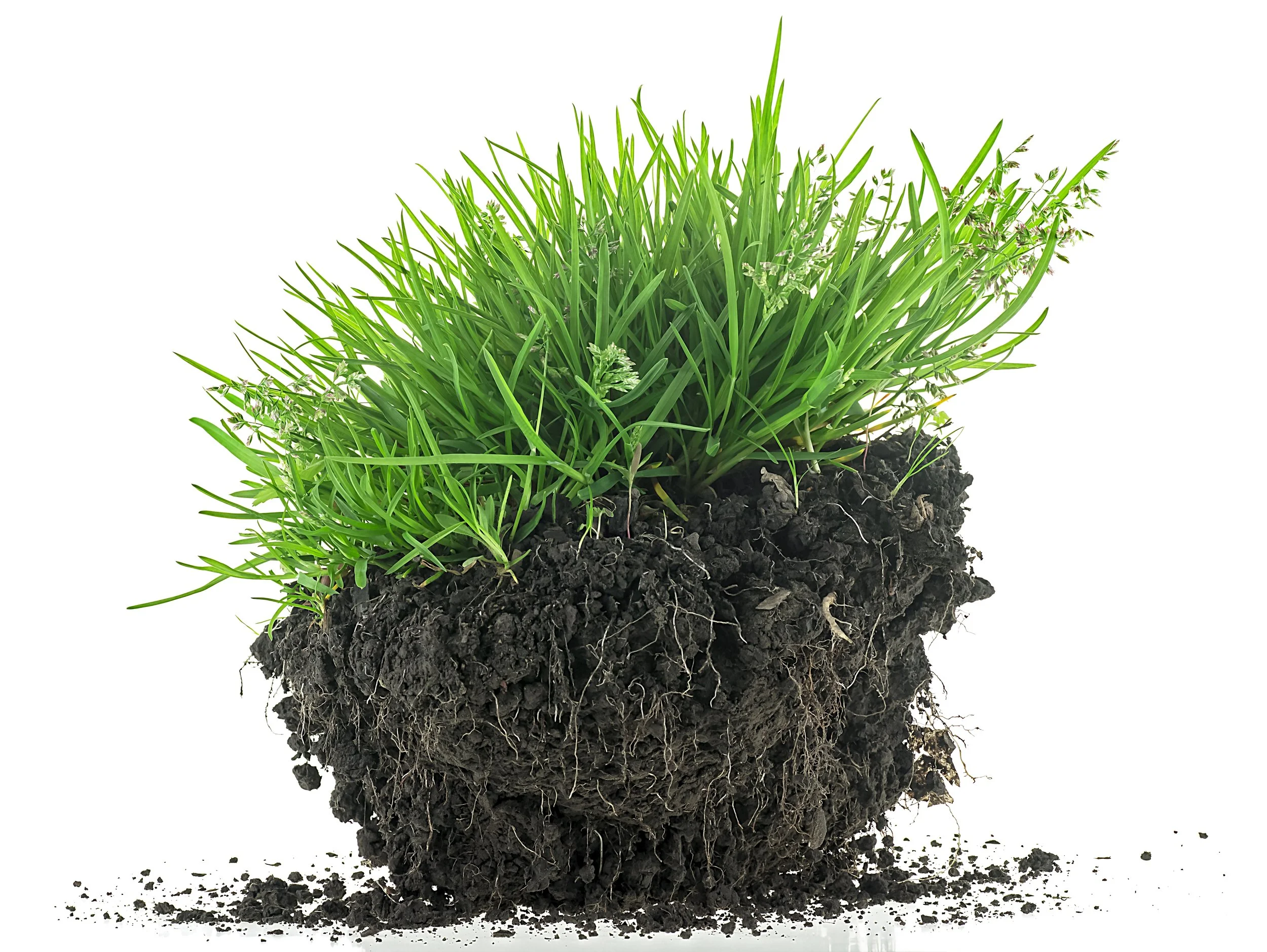
The power of perennial cover is in the roots. Soil scientist Christine Jones refers to "the liquid carbon pathway" when she talks about the energy that roots push into soil through living roots. By her account, below-ground carbon is 30 to 50 times more likely to become long-term organic matter than carbon from above-ground growth. Roots over shoots, to maximize soil carbon!
The above-ground plant growth provides additional benefits including, reduced soil erosion and moisture retention, which keeps the ground cooler. But that reframes a common concern. If a perennial stand looks modest above ground in midsummer, it has not stopped working. The roots are still providing physical, structural and biological value to soil underground.
2. Weathering the swings
Roots build soil aggregation allowing water to move down instead of sideways. Whether water in the orchard or vineyard is coming from pumps or precip, if it isn’t penetrating the soil, those “acre-inches” are lost. Water running off your land takes away nutrients, organic matter and frequently soil, via erosion. Aggregation and porosity, via living roots year-round, can reverse this problem. The recent Hold Your Ground: How Perennial Cover Crops Control Erosion In Orchards And Vineyards blog by OBC dug into the erosion topic.
This matters even more as the weather becomes more dynamic. A big rain event is only a blessing if the soil can absorb it. It’s a problem when heavy rainfall hits bare soil or compacted ground and runs off carrying soil with it. “We need the water” is always true; and your soil needs to keep the water that falls on it. Perennial roots stay in place across the seasons, even when cool-season growth has gone dormant and you’re prepping for harvest – living roots below ground provide some assurance of infiltration when the rains arrive.
3. Managing a permanent stand without tillage
Perennial conservation cover can only thrive in a no-till/low-till environment. Deep cuts to the top few inches of soil will kill the roots you’ve invested money and time into. Light tillage may only prune those roots, but too much depth, frequency or disturbance will terminate perennial and set the soil ecosystem back. That is a real shift for many orchard and vineyard systems, where clean floors have long been the norm, especially for ground-harvested nut crops.
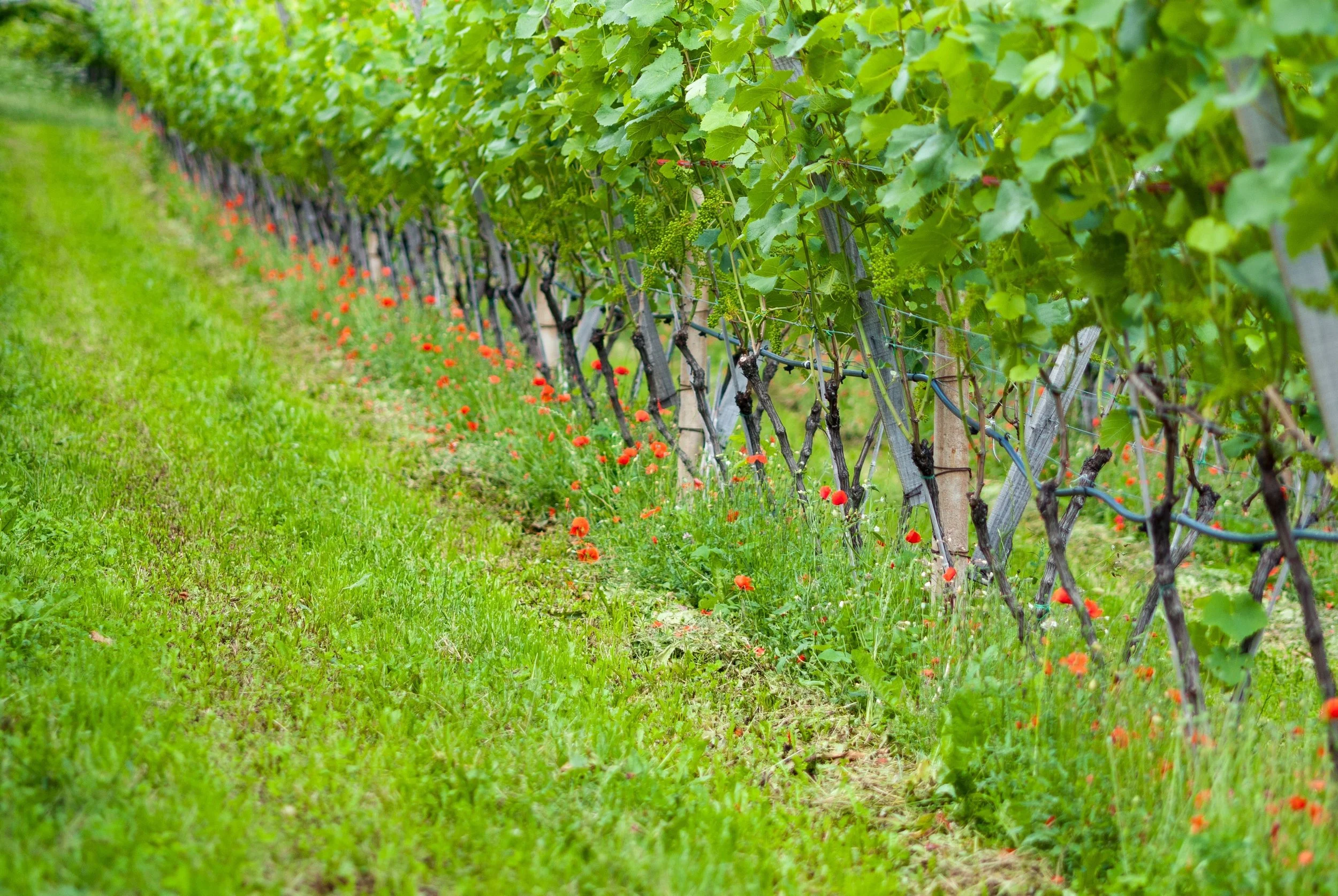
With the change in practice, management becomes simpler, not harder. Because California's Mediterranean climate brings little summer rain, a well-chosen perennial goes dormant through the dry months. Bulbous bluegrass fits well for that reason. Perennials come back on their own, eliminating the cost of re-seeding each fall. Trade tilling for mowing, and you’re saving even more time and using less fuel. If you are not irrigating your row middles, you are likely looking at one or two mowings a year rather than repeated tillage passes.
That mowed-down thatch is already earning its keep. On heavy clay in Yolo County, where soil cracks open by midsummer, one grower’s thatch bridges those cracks and he loses fewer nuts than the neighbors without cover. The cracks are no small thing: he once dropped his phone three feet into one and needed a backhoe to retrieve it. Farther south, another grower finds the litter binds loose late summer soil in the windrow during harvest, keeping dust down and improving air quality. Each of these growers traded tilling for mowing, and their effort each season is reduced!
4. The economics, and how grant funding reduces risk
Perennial seed frequently costs more, frequently three to four times the cost of annual mixes. On the upside, permanent cover can match the lifecycle of your orchard or vineyard. By eliminating future seed purchases and annual planting expenses, it may only take 2-3 three years to break even. The payback comes sooner once you save on various tractor passes that won’t be needed. Mowing takes less horsepower than tilling, which matters when California diesel was near seven dollars a gallon not long ago. Fewer passes also mean less equipment wear, and lower fuel and labor costs.
This is where OBC’s Advancing Markets for Producers grant can help reduce the up-front cost that is a barrier for a lot of growers. The grant now covers 100 percent of the seed cost for the first 10 acres, excluding tax and shipping. Benchmarked against Oakville bluegrass, that is roughly a $3,700 seed budget for those acres. Beyond that, it covers an additional $100 per acre for the next 100 acres.
Any qualifying perennial, permanent, or conservation cover mix works, including hard-seeded annuals you let reseed. That leaves room to get creative. Do you want to test multiple varieties or mixes? We can support that too. Consider two or three small pilots with different mixes to see what works well for your operation, soil type, and management goals.
5. Diversity, flexibility, and getting closer to natural
Diversity matters in cover cropping because of biology. Much of the benefit comes from plants and soil life working together. US agriculture spends about $5 billion a year on nitrogen fertilizer, while the atmosphere holds roughly 30,000 tons of nitrogen above every acre. Most plants cannot use that nitrogen on their own. But legumes and rhizobia in the soil form a symbiotic nitrogen-fixing relationship that converts that essential plant nutrient into plant-available nitrogen. A diversity of plants feeds a diversity of root exudates, which supports a diversity of microbes, which deliver more services to your cash crop. Different root types, from fine and shallow to deep and penetrating, also help soil structure and water movement.
Diversity can include annuals, as long as they reseed reliably. Hard-seed species like some clovers and medics, can reseed themselves over a two to three year period. Keith mentioned an almond orchard with a self-reseeding stand of medics that stayed short enough to match the bluegrass. That's an annual earning its place in a permanent system.
Keep asking whether you can move your operation a little closer to a natural system, since that tends to cost less over the long run. The AMP grant takes some of the financial risk off the table, but the real investment is your time and attention. And when you learn something, share it with your neighbors. That is how this knowledge has always spread, one grower building on what worked for the last.
---
If you are weighing perennial cover for your orchard or vineyard, now is the time to sort out seed and logistics, especially with harvest running early this year. Reach out to learn whether the AMP grant fits your operation, and we will help match your goals to a mix that works for your ground.