
Hold Your Ground: How Perennial Cover Crops Control Erosion In Orchards And Vineyards
The practice that protects your soil, every season.
Various forms of erosion look different in vineyards and orchards. But they all cost you in terms of time, productivity and land value. Whether it's water cutting and carrying fertile soil away during winter storms, hot winds blowing soil during summer, or repeated tillage shifting it with every pass, they share the same weakness. Your most valuable asset with nothing rooted in it and nothing covering it, is ready to move.
The good news? There's an affordable and practical solution, which is uniquely effective for orchard and vineyard operators. A perennial cover crop keeps living roots in the soil year-round, while also producing vegetation for above-ground protection, shading and organic matter. For permanent crop systems, perennial species in the cover-crop plan will conserve your soil.
This piece looks at how erosion works, why perennial cover species are a solution, and how to put them to work on your farm.
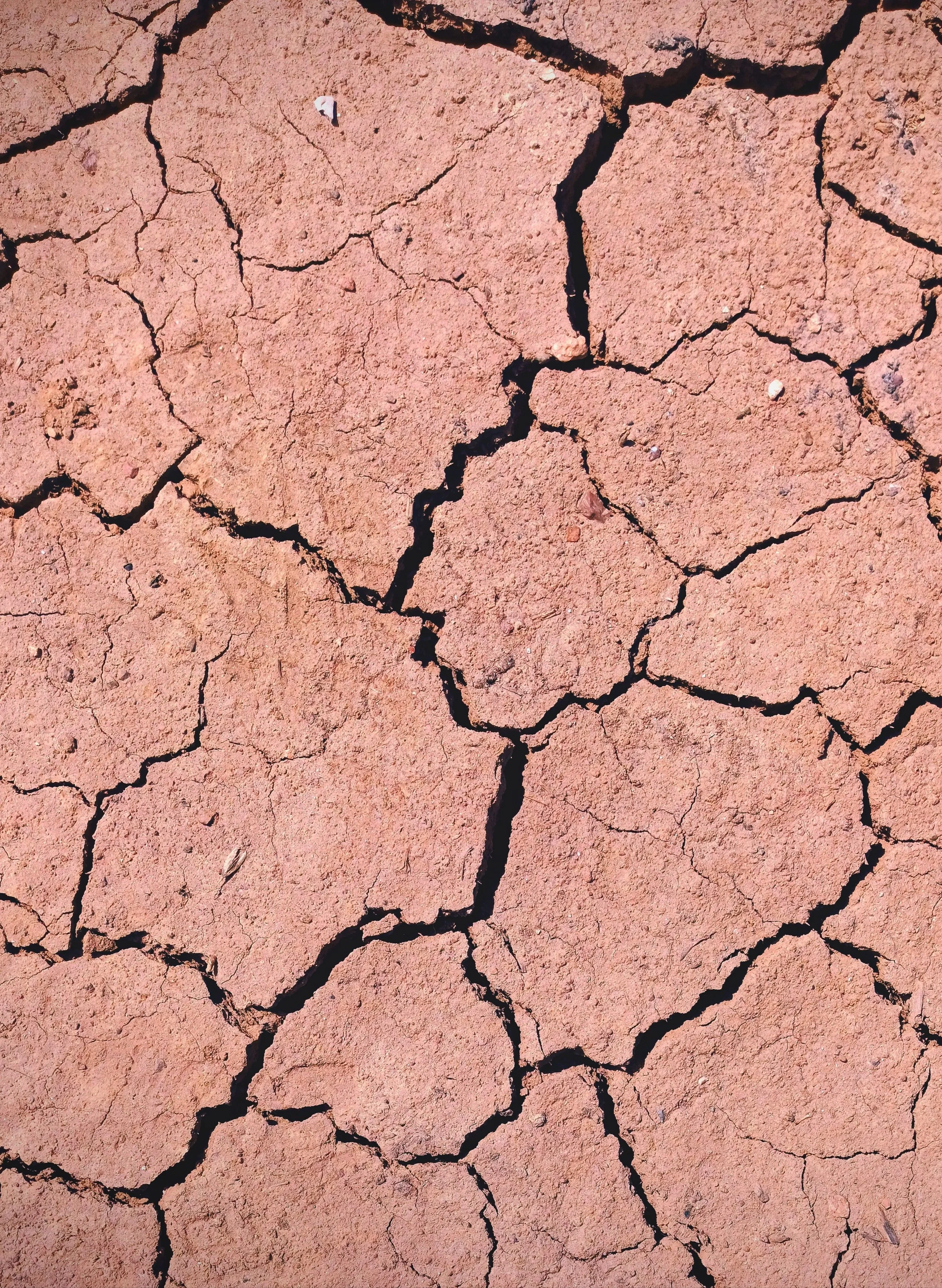
The Challenge
The top layer of soil holds most of the soil's biological activity, organic matter, and the capacity for water infiltration and storage. Losing topsoil to the forces of erosion reduces soil health and the productivity of the land.
Three forces strip soil from your land:
- Water. On sloping ground, water erosion is the greatest concern, because slope and rainfall intensify runoff. Winter storms, especially intense atmospheric rivers, literally hammer bare soil, and then can carve deep ruts while carrying your soil off! The force of gravity carries the water, topsoil, rocks and debris down the slope, and what starts as a small trickle, can eventually turn into gullies that impede equipment movement and are costly to repair!
- Wind. Dry, bare soil without vegetation and roots to hold it in place is at risk of wind erosion. Late summer and fall winds will carry top soil off your farm! With the bare topsoil stripped away, the compacted ground is less likely to absorb moisture when rainfall comes.
- Tillage. Every pass cuts, loosens, dries and exposes soil to movement. Soil aggregates and the fine roots that hold soil together are broken. If your land has any slope, or if there’s a breeze, soil is shifting. Even on flat ground, each pass pulverizes the surface and buries protective residue, leaving it open to wind erosion.
Walk your ground frequently and you'll see all three at work: rills and muddy runoff after a storm, dust and soil drifting across access roads on windy days, shallower topsoil at high points of your farm. The pattern is the same. Where the ground is bare, the soil is moving. But, there is a practical and affordable solution.
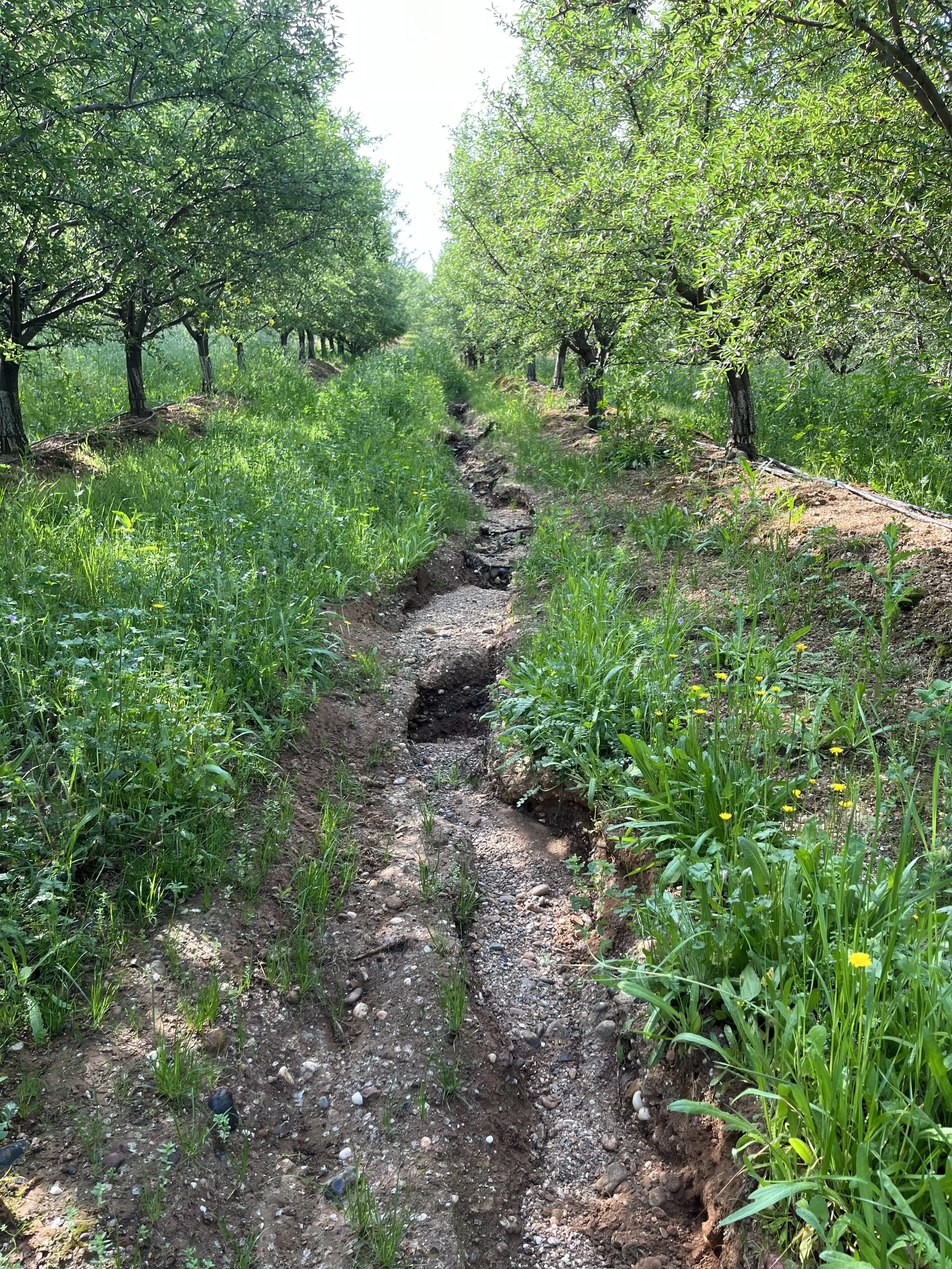
Why Perennial Cover Holds Your Ground
A perennial cover crop addresses each form of erosion at once, because it removes the weakness they all rely on. Here’s how:
Against water. Roots open up the soil and create channels for rain to infiltrate rather than run off. Even when the perennial vegetation has gone dormant, the living roots are keeping your soil open to water and oxygen. The canopy and even dry stubble breaks the fall of raindrops, so they’re less likely to cause surface compaction, again helping with infiltration. Stems, litter and cover crop residue slow water that moves across the surface, trapping sediment and keeping your soil in place.
Against wind. A living canopy and a root-bound surface secure loose particles, holding the ground through the dry season when bare ground would otherwise blow. That summer wind may encounter a dormant perennial cover, but roots, stems and stubble are anchored to trap and hold soil in place. In fact, many farmers with cover crop residue actually accrue soil from their neighbor’s farms when the wind kicks up!
Against tillage. Permanent cover does not need annual tillage. Choosing perennial cover is choosing to stop the downhill creep that repeated tillage causes.
This is where perennial cover separates itself from an annual cover. A perennial keeps living roots in the soil, and protection on the surface year-round. It is rooted and soaking up rain through the winter and still present and holding the surface through the dry summer and fall winds.
Putting a Perennial Cover to Work
Perennial cover is planted to last. Established once, it persists across seasons rather than being reseeded each year. It is an investment that yields annual returns, much like your orchard or vineyard. Perennial cover pairs perfectly with a no-till system too. Manage it by mowing rather than tilling, and the clippings settle into a thatch that protects the surface.
Practices That Work Alongside It
No-till is a natural partner. Keeping the cover in place and the soil undisturbed preserves the structure and pore space that let water soak in, protects the surface against wind, and ends tillage erosion entirely. Cover and no-till work hand in hand.
Mulching is another great tool, especially on the tree or vine row. Wood chips, straw, mow and blow or chop-and-drop clippings from the cover crop will cushion raindrops, slow runoff, and cover the ground.
Windbreaks and field borders, such as hedgerows and perennial grass strips, slow the wind before it reaches open ground. They take a few seasons to establish, but they shield the exposed edges of a block, where the rows meet open air.
Grant Funding is Here to Help
Perennial cover seed is an investment that can provide annual returns. TheAdvancing Markets for Producers (AMP) grant, which OBC administers with USDA funding and NRCS support, offsets the cost of getting started. Via the AMP grant, seed costs for perennial and conservation cover are covered up to $13,750 per producer for planting perennial cover and committing to minimal tillage. Eligibility covers domestically owned farms in California, Oregon, Washington, or Arizona, on acres not already receiving other USDA funds for the same practice. You can find program details on our website at www.obc.ag. If you're interested, don't hesitate to reach out. Starting early gives you the best chance of success this fall.
The Long View
Erosion may seem gradual as soil moves little by little. Then a single wet or windy season makes the loss obvious and painful. A perennial cover mitigates every form of erosion with a single planting, and once established the same roots that hold the soil on its worst days are building it on all the rest. With living cover, protecting the ground and improving it are the same work.
FURTHER READING
- Battany, M.C., and M.E. Grismer. "Rainfall runoff and erosion in Napa Valley vineyards: effects of slope, cover and surface roughness." Hydrological Processes, 2000. A California hillside-vineyard study measuring how slope and ground cover change runoff and soil loss.
- "Minimizing Soil Erosion: Keeping a Valuable Asset in Your Vineyard." Lodi Winegrape Commission, lodigrowers.com. Practical, California-focused guidance on cover crops, mulches, and protecting hillside vineyard soils.
- "Erosion Control in Vineyards." Grapes Community of Practice, grapes.extension.org. Walks through the factors behind vineyard soil loss, including the Revised Universal Soil Loss Equation.
- Magdoff, Fred, and Harold van Es. Building Soils for Better Crops, 4th edition. SARE, sare.org. Free online. The soil-degradation chapter covers water, wind, and tillage erosion and the role of living cover.