
Biochar, Explained: An Ancient Soil Amendment, a Modern Tool
Part one of a series on biochar for orchard and vineyard growers
Biochar is organic material heated with little or no oxygen until it becomes a stable, carbon-rich solid. The process is called pyrolysis, and the feedstock can be almost any dry organic matter: wood, prunings, crop residue, or nut shells. The International Biochar Initiative defines it as a solid made from the thermochemical conversion of biomass in an oxygen-limited environment.
Biochar looks like the charcoal in a backyard grill and is made by the same basic process, pyrolysis. The difference is intended use: biochar is made for soil improvement and long-term carbon storage rather than fuel. Feedstock and pyrolysis temperature shape the final product. Biochar made from almond shells will be structurally different from biochar made from pine slash or rice hulls. They each perform differently in soil too. No two biochars are identical, so understanding the goals of the biochar end product, the source material composition and the size of chunks particles is important for project success.
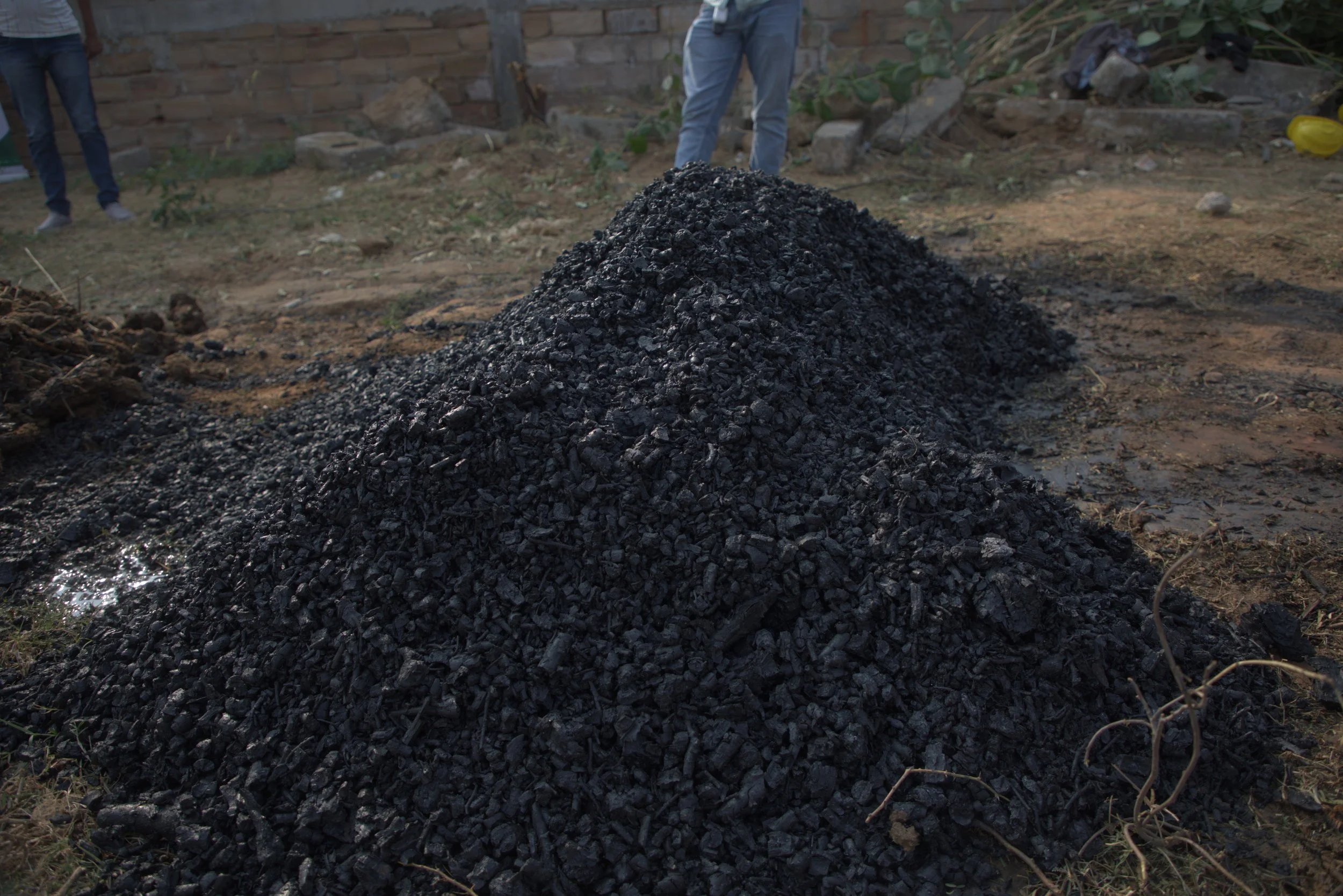
Ancient soil, modern name
The model for biochar is terra preta, the dark, fertile soils of the Amazon basin. Indigenous communities built these soils under their settlements between roughly 450 BCE and 950 CE. The charcoal worked into them has stayed in the ground for thousands of years. Central Amazonian terra preta holds about three times more soil organic matter, nitrogen, and phosphorus than the poor soils around it, according to soil research by Glaser and colleagues. Whether people made these soils on purpose or as a by-product of daily life is still debated among archaeologists.
Modern interest traces to Dutch soil scientist Wim Sombroek, whose 1966 book Amazon Soils drew attention to terra preta. The word biochar itself is newer, a blend of biomass and charcoal that came into use in the 1990s. Research picked up in the 2000s, and Lehmann and Joseph's 2009 volume Biochar for Environmental Management became the field's standard reference. Climate policy pushed it further into view. In its 2018 special report on 1.5 degrees C, the IPCC listed biochar for the first time as a promising negative emissions technology.
What it can offer growers
For orchard and vineyard growers, biochar's appeal is practical. It can improve water retention and support robust soil microbial communities. It may also open a unique revenue opportunity. The water holding effect shows up most on coarse, low-organic-matter ground and in dry years. Microbiome, soil structure and nutrient retention build slowly. The reason for the revenue angle is durability: the carbon in biochar stays put for centuries, which is what makes it eligible for carbon credits.
None of that is automatic. The size of the benefit depends on the soil, water regime, feedstock, application rate, and depth of application to your vineyard or orchard. As with many novel approaches to building resilience, the evidence is more mixed than headline trials suggest. That gap between promise and proof is what our 3-part series will work through. Next up: starting with the vineyard and almond trials closest to home.
Have you tried biochar in your operation? Let us know about your experience!