
Biochar In The Vineyard: The Evidence So Far
Part two of a series on biochar for orchard and vineyard growers
Part one introduced biochar and its history. This part takes up a narrower question: does biochar earn a place in the vineyard? Research suggests it can deliver real gains, depending on location.
A Salinas Valley trial
One relevant California trial was conducted at the Oasis Vineyard in the Salinas Valley, funded by the California Department of Water Resources and led by researchers at UC Riverside with Monterey Pacific managing the vineyard. In that study, biochar and compost were worked into low-organic-matter sandy soil before a Pinot Noir block was planted. The 2020 report recorded a 45% yield increase in the biochar treatment over the control, with all treatments on the same irrigation schedule, indicating better water use efficiency rather than an increase in water volume. Averaged across all six harvests reported through 2024, yield gains over the control came to 24% for biochar, 29% for compost, and 34% for the two applied together. The gains were largest in the low-yielding seasons. Adverse weather at and after fruit set cut 2021 yields across the trial. The control came in at 3.8 tons per acre and the combined treatment at 6.7.
What the soil showed
The third harvest report sampled soil in May 2021, four years after the amendments went in. Analysis at Regen AgLab showed that biochar at 10 tons per acre raised soil organic matter more than compost at 15 tons per acre. Soil respiration, a measure of potential microbial activity, registered very low in the control plots and rose most where biochar was applied alone or alongside compost. Organic nitrogen release also increased more under biochar alone than under compost alone, which the authors read as evidence that biochar raised both microbial activity and the food substrates available to those microbes, even applied on its own.
Nutrient supply is another matter. In a webinar reporting details of the study, Doug Beck, the soil scientist advising the vineyard manager, put the compost application at roughly a quarter pound of phosphorus and a pound of potassium per vine, against 0.03 pounds of phosphorus and a quarter pound of potassium from the biochar, and credits that gap for the larger early response under compost. Whatever biochar does for nutrient retention, it carries few nutrients itself. The trial did not measure vine nutrient uptake directly, so the connection between the soil changes and the fruit remains inferred rather than demonstrated.
Worth noting: Pacific Biochar supplied the material and co-authored the reports, so the trial is best read as a promising supplier-partnered result rather than independent confirmation.
Water and nutrients move together
Nutrients reach roots dissolved in soil water. Nitrate travels mostly by mass flow, pulled along as the vine transpires, while phosphorus and potassium depend on diffusion through the water films coating soil particles. Both slow as soil dries and those films thin. A 2024 review in Frontiers in Plant Science describes transport of most nutrients to the root surface as substantially impeded under drying conditions, which is why a vine can stand in soil that tests adequate and still take up less than it needs. Potassium is the most exposed, since it moves almost entirely by diffusion.
That pathway is the usual explanation offered for biochar results. An amendment holding more plant-available water keeps delivery going further into a dry stretch. The vineyard trials measured outcomes rather than the pathway itself. In a four-year experiment in a non-irrigated Tuscany vineyard, Lorenzo Genesio and colleagues at Italy's National Research Council measured productivity up to 66% higher in biochar plots than in controls, with no change in grape quality. The drier the season, the larger the gain, so the biggest differences showed up in the driest years. Biochar tends to help most in soils with limited water holding capacity and where rainfall is limited. A more recent Chianti Classico trial, the B-Wine project published in early 2026, measured improved soil conditions and vine physiological performance one season after biochar was applied across three organically managed vineyards.
Irrigated blocks complicate the picture. Deficit irrigation is a standard lever for concentrating sugars and shaping fruit character, so an amendment that eases vine water stress could work against a quality target as readily as toward it. At Oasis that tension did not appear. Grape quality was analyzed at the second harvest and again at the fifth, and neither round showed significant differences between treatments. Steve McIntyre of Monterey Pacific, reviewing the fifth-harvest juice panel, reported no meaningful positive or negative impact other than a small difference in brix. The soil moisture sensors add a further wrinkle. Compost and the combined treatment both dried the soil at 18 and 30 inches, while biochar alone showed no significant drying effect. Beck attributes the drying to larger vines drawing more water from the profile. The gain reads as more fruit per unit of water applied rather than more water held in the soil.
A closer look at the evidence
A 2025 review of biochar in viticulture by Lippi and colleagues at the University of Florence pulled together the existing field and greenhouse studies. It found consistent evidence that biochar can improve soil structure, raise cation exchange capacity, and increase water availability, all of which support drought resistance in grapevines. The same review was more cautious about the vine itself. Effects on yield, physiology, and grape quality remain inconclusive, with gains in some trials and nothing in others. Soil response is the steadier finding. On fruit the question is whether biochar helps, since trials found either a modest benefit or no difference. On the vine, the question is whether it does anything at all, with Oasis recording heavier pruning weights and greater canopy vigor while a two-site Oregon trial by García-Jaramillo and colleagues found no significant differences in leaf water potential or carbon assimilation.
Beck draws the same boundary around his own results. The Oasis block sits on poor, sandy, low-organic-matter ground, and he does not expect comparable gains everywhere. The better a soil's existing fertility, in his reading, the smaller the likely response.
What determines the response
Several factors separate a strong result from a flat one. Soil texture and starting organic matter set the ceiling, since coarse, low-organic-matter ground has the most room to respond. Water regime matters, because the clearest gains appear under dry or deficit conditions. Feedstock and pyrolysis temperature change how biochar behaves. More is not automatically better.
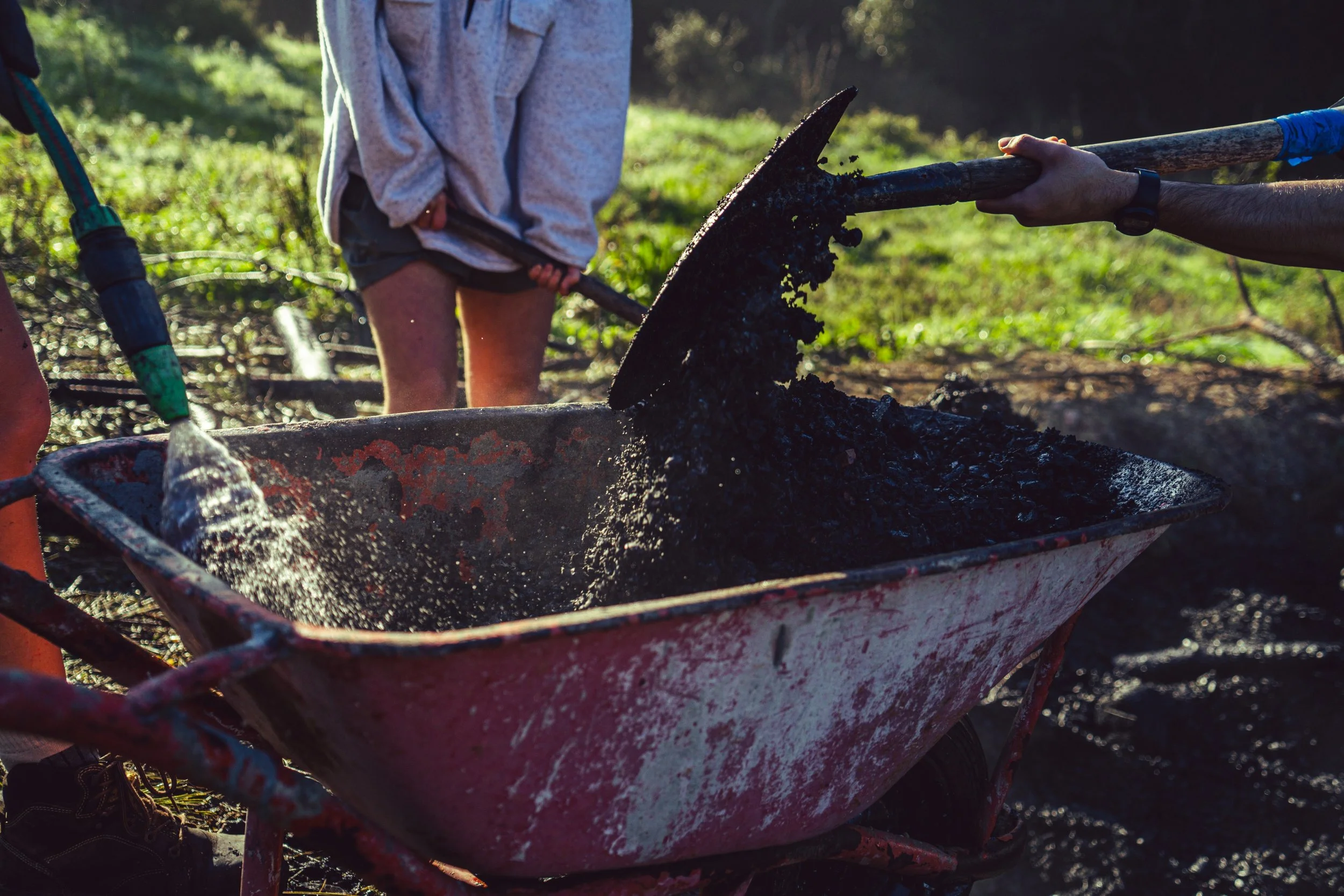
Handling adds friction that rarely shows up in trial summaries. Biochar is light and dusty, and spreading it evenly takes labor, though wetting it before application cuts dust and drift. In vineyards, it is frequently deep ripped into the row at replant or blended into a compost windrow beforehand. The Salinas Valley trial did the latter, curing the biochar in the compost pile for several weeks before application, which Beck recommends as standard when the two are used together. Replant remains the practical window for most blocks.
Contamination is worth considering. Clean forest slash or almond shells carry little risk. Material made from dairy waste streams or urban construction wood can bring heavy metals and other residues. Maienza and colleagues tracked a Tuscan vineyard for five years under single and repeated biochar applications and found no negative effect on the soil microbial community. That study also measured what came with the material: soil lead rose in both treatments and polycyclic aromatic hydrocarbons rose in proportion to the dose, though both stayed well under EU and Italian limits for agricultural soil.
The vineyard case for biochar is real, but further study is needed to fully understand the benefits and best use cases. As currently understood, it rests on water, soil type, and disciplined application more than on any single trial number.
Part three turns to almonds, where California trials are still in the ground.