
Roots vs Shoots
Roots vs. Shoots; Biomass vs. Biological. When it comes to covering the “floor” of your vineyard or orchard, an entirely new conversation is taking place.
Perennials are an essential tool in the future of orchard and vineyard health.
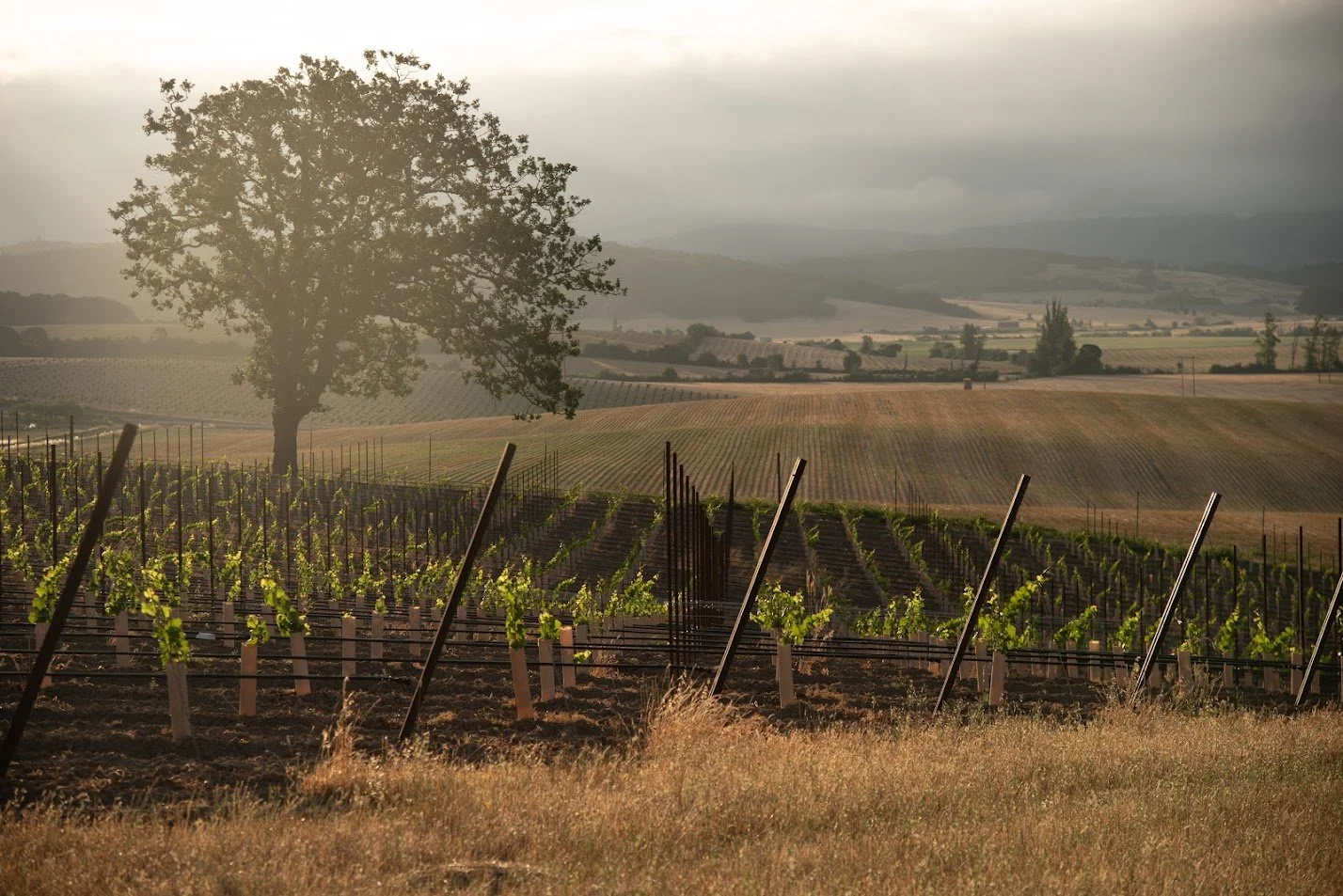
In the world of permanent crops, such as orchards and vineyards, we spend a lot of time looking at the canopy and sometimes forget the most valuable resource is right beneath our boots. For decades, the vineyard and orchard standard was a “factory clean” floor: bare soil kept sterile with herbicides and frequent tilling. Then came the shift toward planting annual cover crops, which brought life back to the soil each year, albeit briefly. The cover cropping cycle created another treadmill for growers to keep pace with, along with annual costs for seeding and termination. A proper annual cover crop demands significant resources, but may keep roots in the soil for less than half the year.
Earlier this year at the Burrough Family Farms Regenerative Tree Nut Day, one grower mentioned that they had literally mowed and baled their cover crop biomass to get it out of the way. Another grower mentioned wanting to explore lower profile perennial cover species, because he is more interested in active roots below ground, not forage above ground.
We are seeing a shift toward perennial conservation covers. With a cash crop demanding as much focus as possible, and soil health being fundamental to the cash crop success, growers are wondering if perennial species can deliver results. Also on their mind, what if that permanent cover doesn’t need to be “terminated”? Is such a thing possible?
The Power of the Perennial Root
The primary advantage of a perennial system is the constancy of a living root in the soil.
In an annual system, there is a "boom and bust" cycle. You have a flush of root exudates during the growing season, followed by decay and potential starvation for the microbiome after termination. If termination includes spading, tilling or spraying, the microbiome suffers.
Perennials can provide a steady, 365-day-a-year drip of carbon into the soil. Even when perennials are dormant and the above-ground vegetation has withered, there are roots below ground interacting with microbes, maintaining porosity and aggregation. When roots are permanent, the fungal networks (mycorrhizae) and stable soil aggregates have the time they need to build deep, resilient structures. This improves water infiltration and "soil breathability" (redox), ensuring that when it rains, the water goes in rather than off.
Another value proposition for those perennial roots: the microbiome they support will help you back off inputs.Thriving bacterial and fungal communities increase “bioavailable” nutrient levels that your primary crop relies on.
Roots Over Shoots: The "Biomass" Trap
Many growers worry that if they aren't growing a massive amount of top-growth biomass, they aren't building soil. But in a perennial system, the living root system is prioritized.
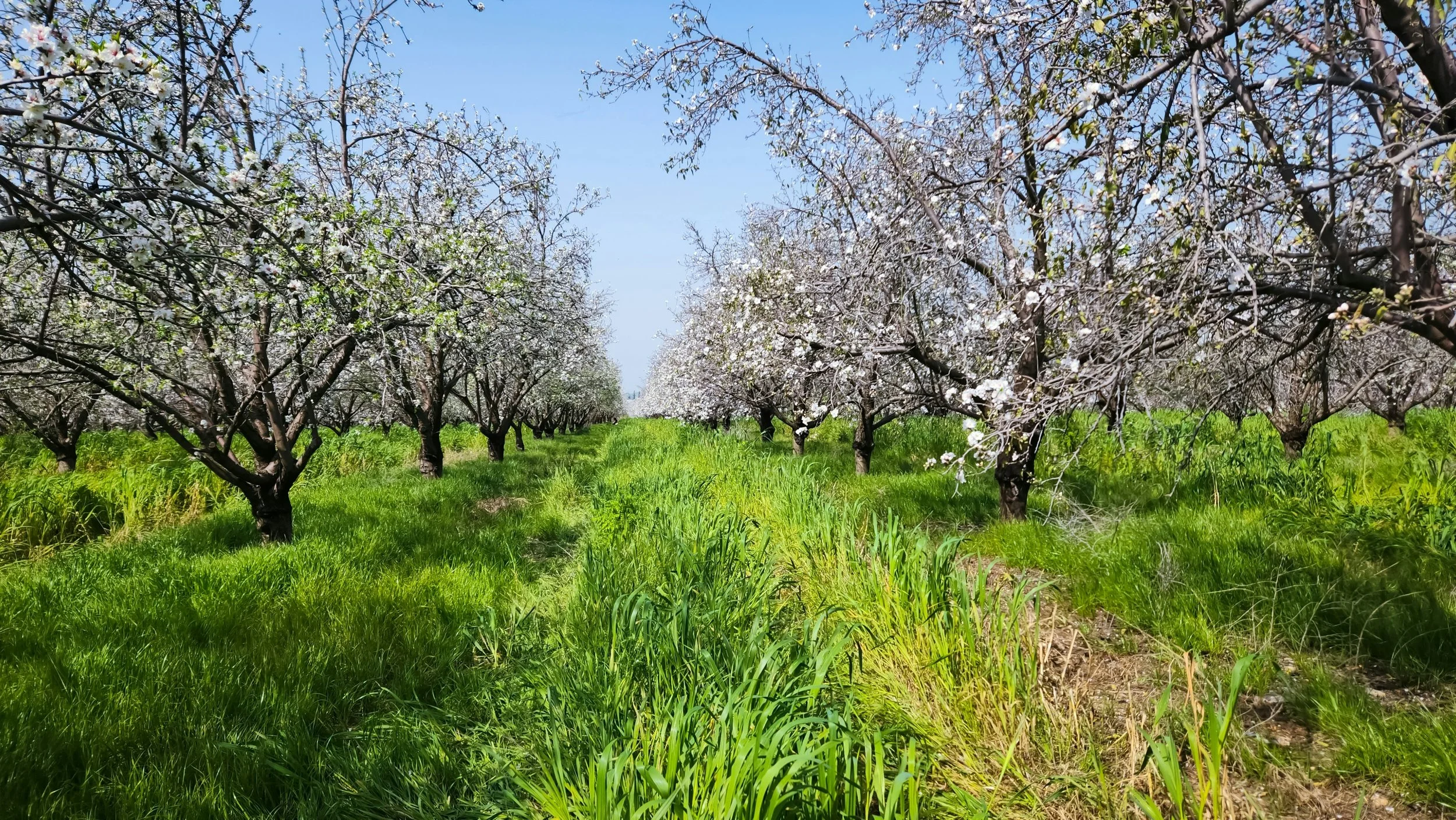
Low-growing grass and legume species are proven to provide root mass and nitrogen fixation for soil structure and health. The perennial system can maintain root biomass up to 30,000 lbs per acre, 3-5x what is above ground! These roots create a "biological drilling" effect, breaking up compaction layers without the need for a steel shank. Because these plants don't produce massive amounts of top growth, they require less mowing, and hold moisture (humidity) closer to the soil, reducing potential fungal disease pressure seen in high biomass environments. Overall, perennial cover improves soil structure, water holding capacity, and biological nitrogen fixation when legumes are included in the species mix.
The Challenge: Competition and Establishment
It isn't all sunshine and clover, though. A significant hurdle with perennial covers is the establishment phase. Perennials are notoriously slow to start, and downright unimpressive compared to annuals like mustard or oats. While annual species show impressive above-ground biomass growth, perennials put energy into root development first. During the first year, competition from "weed" pressure can be challenging while the perennial "carpet" finds its footing. Turn the balance of power in favor of the perennial species with strategically timed mowing or clipping. Taking the annual “weeds” down to the height of the perennial species keeps sunlight on the whole party.
There is also the valid concern of resource competition. In water-limited environments, a permanent sod can compete with the cash crop for moisture. However, a summer-dormant species provides improved infiltration and reduced soil surface temperature without demanding moisture for vegetative growth.
Can We Have the Best of Both Worlds?
What if annuals are included in the system? In a perennial cover system, you’re not going to terminate through tillage or spraying, so any annuals (introduced or volunteer) may go to seed as part of the “conservation cover”. This is ok, and might be beneficial. By allowing annual species like subterranean clover or certain medics to reach maturity and drop seed, an annual component within the cover is created. This mimics a natural prairie ecosystem. These root systems provide a deep, stable architecture from perennials and a seasonal "pulse" of high-energy exudates and diverse biology from the annuals. This diversity is key because soil microbes thrive on a diverse diet of different root exudates.
Vegetation management and reducing costs.
In terms of tractor time and fuel, tilling costs more than mowing, and mowing costs more than roller-crimping. Vegetation management with perennial covers should create a savings opportunity. When you pivot to a perennial cover crop system, you’ll still make some passes through the field to manage vegetation. But you can expect to reduce tillage, and in many instances you can reduce mowing too. These changes reduce tractor time, to reduce costs.
Is a clean orchard floor a high priority? This doesn’t need to be a tradeoff, even with perennial covers. A final mowing pass through the orchard (or vineyard) prior to harvest, will mulch any residue to such a degree that it is dry, wispy and doesn’t compromise harvest.
Money talks.
There’s a reason that Oakville Bluegrass Cooperative is excited to offer growers up to $13,750 for perennial seed and conservation cover planting. It’s an investment, with long-term payoff.
Planting annual cover each year has a price, in the form of time, fuel and labor. Once established, perennial cover can reduce costs per acre and soil impacts, like compaction, that can result from frequent tractor passes. There’s still some establishment work that goes into getting the perennial species to out-compete the annual “weeds”. But in the long run, dropping your annual seed budget to zero and reducing tractor passes can save you money while keeping living roots in the soil year round.
The bottom line, taking action.
Within the support available via Oakville Bluegrass Cooperative’s USDA AMP grant, there are a number of low risk, low cost options for vineyard and orchard managers. We have funding to cover perennial seed costs for your operation. This funding can allow you to try it as a pilot project on 10 acres without making a big financial commitment. Design a perennial mix to meet specific goals such as diverse root types, a beneficial pollinator mix or nitrogen fixing legumes.
The Cooperative is collaborating with multiple seed vendors and you will get 1:1 support to ensure that the perennial seed you receive is tuned to your goals. Contact Oakville Bluegrass Cooperative today to learn more.